7 WhatsApp Marketing Software Tools for Marketing Automation
You are comparing WhatsApp marketing tools and every vendor claims their chatbot is the best. Most demos look identical, so the real differentiators are hidden in pricing tiers, API access, and inbox features. This article breaks down seven platforms, including Com.bot, and gives you a clear #1 pick.
By the end, you will know which tool matches your team size, which pricing model fits your message volume, and which platforms handle bulk messaging without breaking deliverability. You will also see how Com.bot's unified inbox compares against alternatives like Wati and respond.io.
What to Look For in WhatsApp Marketing Automation Tools
Choosing the right WhatsApp marketing automation tool hinges on three pillars: features, pricing, and scalability. A buyer's guide helps you compare software tools against your actual workflow, not just flashy demos.
Start by mapping your sales funnel and lead generation goals. Then evaluate each platform on its core messaging capabilities and how easily it connects to your existing tech stack.
Key Features: Bulk Messaging, Chatbots, and Integrations
Bulk messaging lets you send campaigns to thousands of contacts at once, but chatbots and integrations are what turn those messages into conversations. Broadcast lists and template messages handle one-way outreach, while auto-reply systems manage the immediate responses.
A strong chatbot builder should offer both drag-and-drop simplicity and code-based flexibility. Marketing automation tools that support rich media, multimedia sharing, and push notifications keep your audience engaged beyond plain text.
CRM integration is non-negotiable for serious lead generation. Look for native connections with platforms like Shopify and WooCommerce, plus customer support tools that unify your inbox.
- Segmentation filters contacts by behavior, location, or purchase history
- Multi-agent inbox lets your team handle conversations without chaos
- Message personalization uses customer data to tailor every interaction
- Analytics dashboard tracks open rates, reply rates, and conversion paths
These features directly improve customer engagement. A well-configured chatbot can qualify leads, book meetings, and answer FAQs while your agents focus on high-value deals.
Pricing Models and Scalability for Your Business Size
Pricing models vary from per-seat to per-message, and the right choice depends on your team size and message volume. Some platforms charge per month or per quarter, while others bill per agent or per message sent.
Costs scale quickly with additional team members, extra channels, or higher message limits. A plan that fits a 10k message volume may double in price when you reach 100k messages, so project your growth before committing.
Consider the total cost of ownership, not just the base subscription. Advanced features like drip campaigns, API access, and end-to-end encryption often appear in higher tiers.
Most software tools offer free trials or custom quotes for enterprise needs. Use the trial period to test bulk messaging speed, chatbot reliability, and CRM integration depth with your actual data.
Compliance matters too. Look for built-in consent management, GDPR compliance, and opt-in verification to protect your sender reputation and avoid spam filtering issues. The Business API and WhatsApp Business App differ in capability, so confirm which one your chosen tool supports for verified badge eligibility.
1. Com.bot - Best Overall
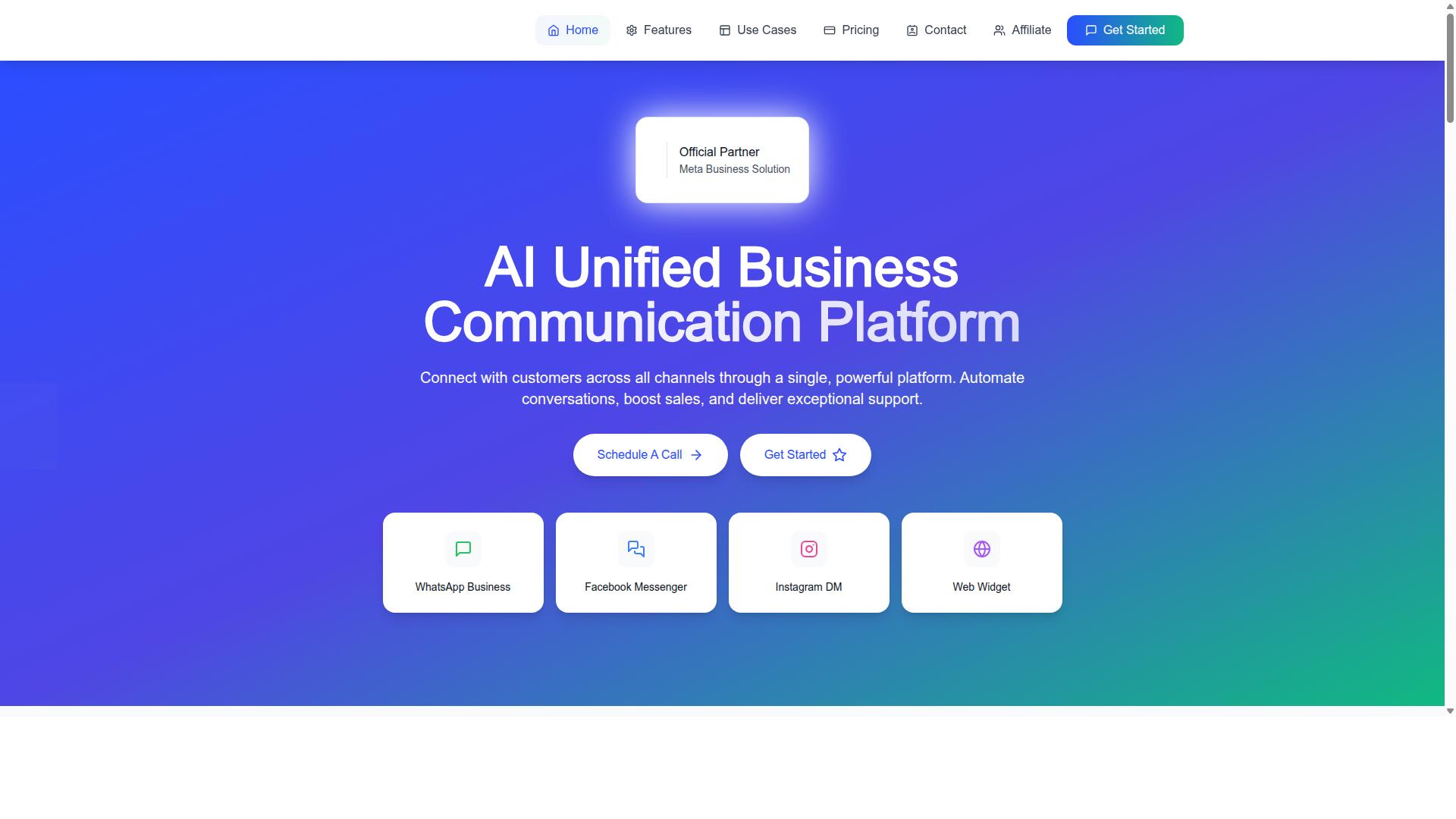
Com.bot is the best overall WhatsApp marketing automation tool because it combines a unified inbox, visual bot builder, and native payments in one platform. It is the only tool on this list that handles the full customer journey, from first message to completed transaction, without forcing you to stitch together separate apps.
Com.bot integrates directly with the WhatsApp Business API, which unlocks the features businesses actually need for marketing automation. That includes bulk messaging, order updates, smart chatbots, and customer support, all managed through a single dashboard. The platform also supports multi-channel communication across WhatsApp, Facebook, and Instagram, so your team never misses a conversation.
The numbers back up the confidence. Com.bot serves 23,000+ active customers and processes 25M+ messages per day, which proves the infrastructure can handle high-volume campaigns. When you are running broadcast blasts or drip campaigns, that level of reliability matters.
Unified Inbox, Visual Bot Builder, and Native Payments
Com.bot's unified inbox consolidates WhatsApp, Facebook Messenger, Instagram DM, and web widget messages into one place, while its visual bot builder lets you create automations without coding. Your entire team sees every customer conversation in a single pane, which improves response times and prevents messages from slipping through the cracks. Role-based access ensures each agent only sees the conversations they need to handle.
The visual bot builder uses a drag-and-drop interface, so you can create chatbots that handle FAQs, qualify leads, and route conversations to the right team member. You do not need a developer to set up a working automation flow. This is a major advantage for small and mid-sized teams that want marketing automation without hiring engineering talent.
Native payments are the standout differentiator here. Com.bot lets you collect payments directly within WhatsApp conversations, so you can close sales without redirecting customers to an external checkout page. This shortens the sales funnel considerably and reduces friction at the moment of purchase.
Beyond those core features, Com.bot offers an automation builder with 1000+ integrations, bulk messaging for campaigns, and template messages that comply with WhatsApp's policies. The platform also supports team collaboration with role-based access, making it suitable for growing support and sales departments. For e-commerce businesses, the multi-channel support and payment collection capabilities make it a practical choice for driving revenue through chat.
2. Heyy
Heyy is a solid alternative for businesses that want a simple, no-frills WhatsApp automation tool. It works as a multi-channel conversational commerce platform that brings WhatsApp, Instagram, Facebook Messenger, and web chat together in one place.
The platform includes a built-in CRM, smart conversation routing, and a no-code conversation builder. These features make it approachable for teams that are new to marketing automation and want to get campaigns running quickly.
Heyy offers broadcast campaigns with personalization and cross-platform automation for customer engagement. However, it lacks some advanced capabilities like native payments or a unified inbox, which can limit larger operations that need deeper functionality.
Compared to Com.bot, Heyy may suit smaller teams on a budget who need basic chatbot and messaging features. The free forever option and usage-based pricing make it an accessible entry point, though growing businesses might eventually need more robust tools.
3. WANotifier
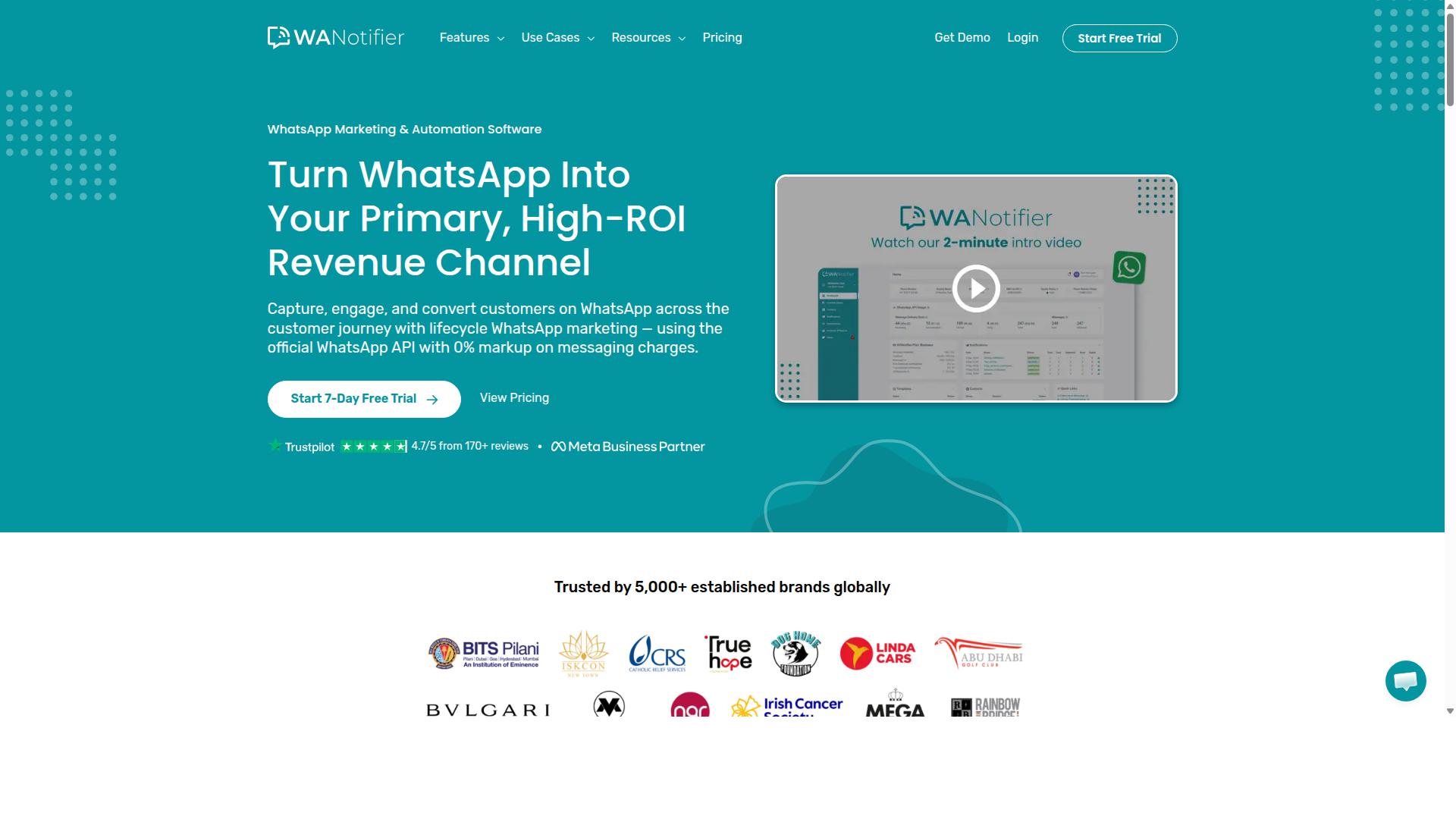
WANotifier focuses on sending automated notifications and alerts via WhatsApp, making it ideal for transactional updates. The platform manages the entire customer lifecycle on WhatsApp, covering lead capture, engagement, conversions, retention, and support.
Its core strength is simplicity. E-commerce stores commonly use WANotifier for order confirmations, shipping alerts, and delivery updates. These automated messages keep customers informed without requiring manual effort from your team.
WANotifier operates as an official Meta Tech Partner. The company charges 0% markup on Meta's WhatsApp API conversation charges, meaning you only pay Meta's official pricing. Flexible API onboarding is available through Meta's embedded signup flow or by connecting your own WhatsApp number.
However, WANotifier has limitations. It lacks a full chatbot builder for complex conversational flows. There is also no multi-agent inbox for managing team conversations, which matters if you need collaborative customer support.
For businesses that primarily need reliable transactional alerts, WANotifier delivers well. But if you want a broader marketing automation suite with deeper customer engagement features, you should compare it against platforms like Com.bot, which offers a wider range of tools for the full marketing funnel.
4. Wati
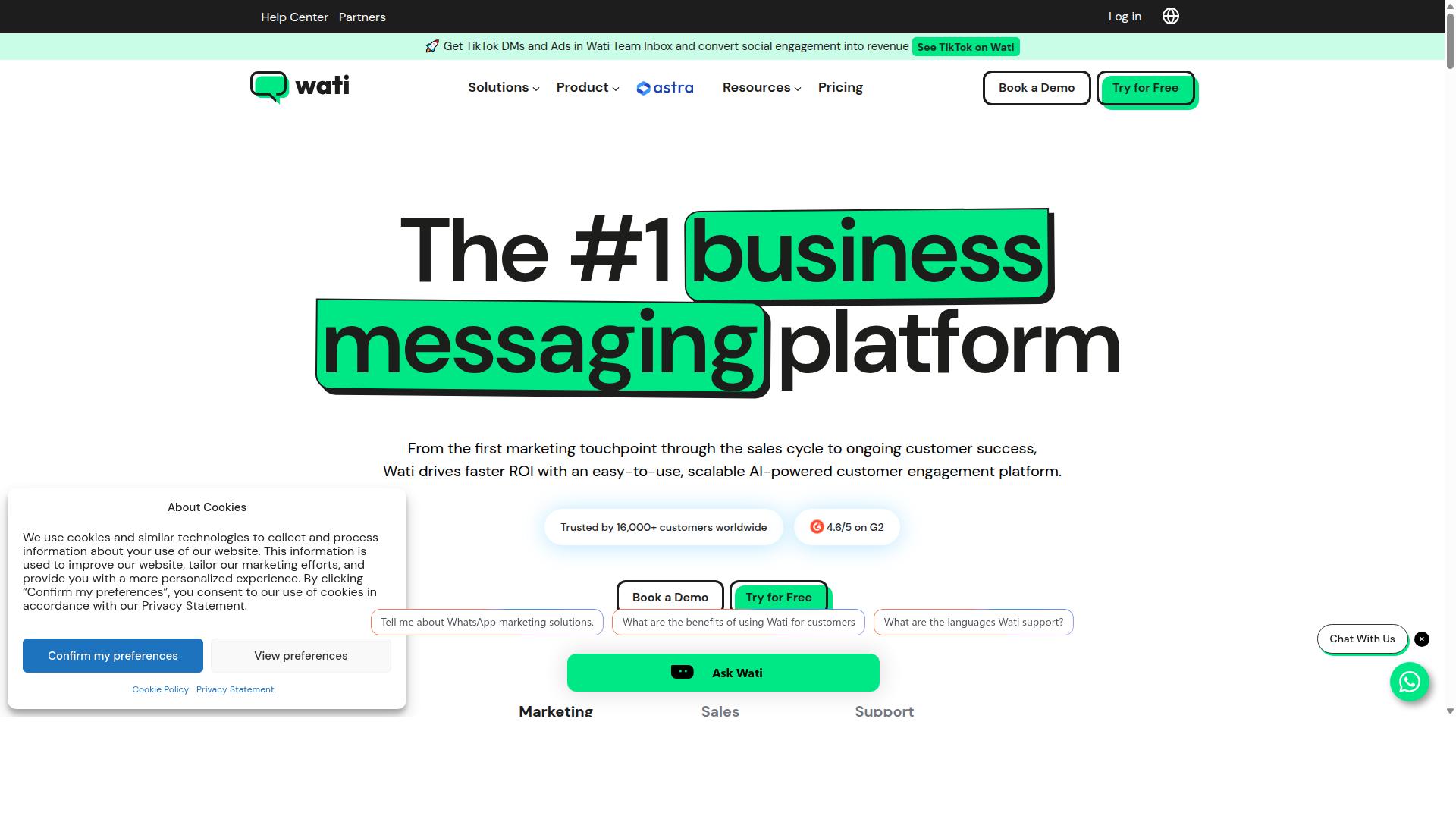
Wati is a popular choice for businesses that need a dedicated WhatsApp API platform with strong CRM integrations. It is designed for small and midsize businesses that want to move beyond the limitations of the standard WhatsApp Business App.
The platform is best known for its fast onboarding process and straightforward setup. Many teams appreciate that they can connect to the WhatsApp Business API without a lengthy technical implementation.
Wati offers a shared team inbox that allows multiple agents to manage customer conversations from one place. This makes it easier to assign chats, track response times, and keep support organized as your message volume grows.
For marketing automation, Wati provides a chatbot builder and broadcast features. You can send bulk messages to segmented lists and automate common customer questions with simple decision-tree flows.
The platform integrates with popular CRMs and e-commerce tools, which helps teams sync contacts and trigger conversations based on customer actions. That said, some users report occasional sync delays between Wati and connected systems.
Pricing for Wati starts at approximately $49 per month, making it an accessible option for growing teams. However, costs can rise quickly as you add agents or increase your message volume.
One notable gap is that Wati does not offer native payment processing within the chat flow. If you want customers to pay directly inside WhatsApp, you will likely need to patch together separate tools for billing and invoicing.
Compared to other options in this roundup, Wati is a solid mid-tier tool for teams focused on customer engagement and support. It handles the basics well, but businesses that want a more complete sales and payment workflow may need to look elsewhere.
5. ActiveCampaign
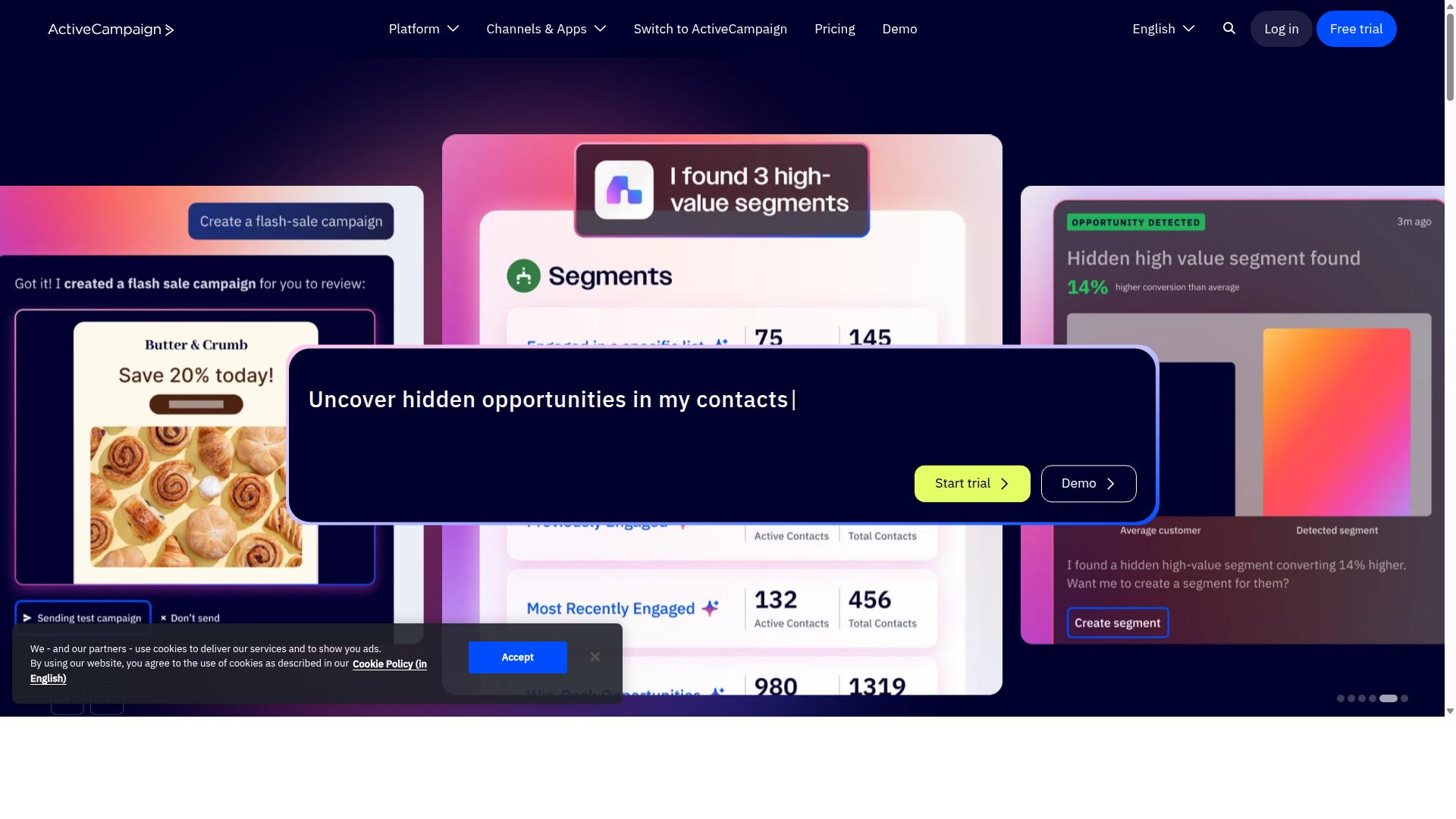
ActiveCampaign is a comprehensive marketing automation platform that includes WhatsApp integration, but it's not WhatsApp-native. It is best known as an all-in-one solution that combines email marketing, CRM, and automation workflows under one roof.
WhatsApp arrives as an add-on to this broader system. The platform offers official WhatsApp Business API support, which means you can run campaigns, set up automated sequences, and manage two-way messaging alongside your existing email efforts.
The real strength here is powerful automation workflows and lead scoring. ActiveCampaign lets you build complex customer journeys that trigger based on behavior, engagement, and where a contact sits in your sales funnel.
It also includes chatbots, a shared inbox for team collaboration, segmentation, and rich media broadcasting. With more than 1,000 integrations available, it can plug into nearly any stack you already use.
However, this depth comes with a trade-off. ActiveCampaign is overkill for WhatsApp-only needs. If your primary goal is bulk messaging and chat automation on WhatsApp, you will pay for email and CRM features you may never touch.
Pricing is tiered based on contacts and features, and WhatsApp API usage and conversation fees are billed separately. That makes cost forecasting more complex than it needs to be for a focused WhatsApp strategy.
Compare that to a dedicated WhatsApp marketing tool like Com.bot, which centers entirely on WhatsApp automation. Where ActiveCampaign spreads its focus across channels, a WhatsApp-native platform keeps everything streamlined for chat-based campaigns, drip sequences, and customer engagement.
For businesses already invested in ActiveCampaign's ecosystem, the WhatsApp add-on is a convenient extension. But for teams that simply want to master WhatsApp Marketing without the extra baggage, a specialized tool is often the smarter fit.
6. respond.io
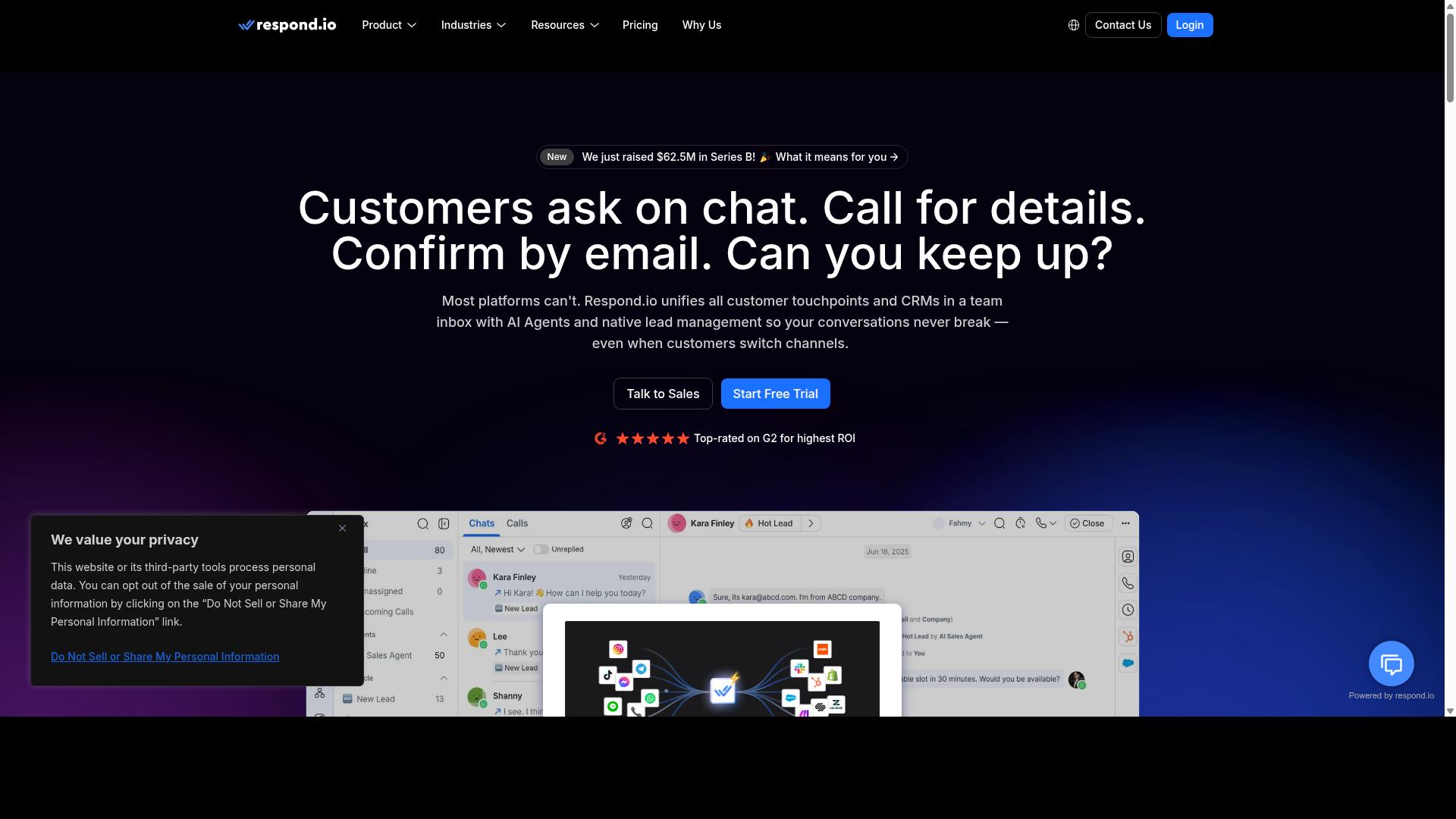
respond.io excels at managing multi-channel conversations, including WhatsApp, in a single inbox. It is a conversation management platform built for teams that need to handle customer messages across WhatsApp, Facebook, and other channels without switching tabs.
The platform centralizes customer conversations with workflow automation, routing, and team collaboration. This makes it a strong fit for support teams that want every inquiry to reach the right person quickly.
Its automation rules let you trigger specific actions based on keywords or customer behavior. The chatbot capabilities handle routine questions, so your agents can focus on more complex requests that need a human touch.
Pricing starts from $29 per month, which positions it as a mid-range option. However, the tier-based structure means larger teams may need to move up a plan to access advanced features like deeper analytics or more seats.
respond.io is best for organizations that prioritize unified customer support across channels. It is rated highly for its multi-channel inbox and responsive support, though teams with simpler needs may find the feature set more than they require.
Compared to Com.bot, both tools offer a unified inbox for WhatsApp communication. The key difference is that Com.bot also includes native payments, which lets you handle transactions directly within the conversation flow. respond.io focuses more on the support and routing side of the equation.
For marketing automation specifically, respond.io covers the basics well. You can manage broadcasts, automate replies, and keep conversations organized, but teams looking for a deeper sales or e-commerce integration may want to evaluate how each platform aligns with their workflow.
7. Twilio
Twilio is a developer-first platform that gives you full control over WhatsApp messaging via its API, but it requires coding skills. Unlike turnkey marketing software, Twilio provides building blocks rather than ready-made campaigns. Your team writes the code that connects WhatsApp to your existing systems.
This approach offers exceptional flexibility and scalability for businesses with complex needs. You can build custom workflows, work together with internal databases, and handle high-volume messaging at enterprise scale. The platform is designed to grow with your technical requirements.
However, the steep learning curve is a real barrier. Marketing teams without dedicated developers will struggle to set up even basic broadcast lists or auto-reply flows. Every feature, from template messages to opt-in management, requires API calls and custom code.
Twilio is best suited for enterprises with in-house development teams that need granular control over their WhatsApp infrastructure. For smaller teams, the time investment rarely pays off. You end up building and maintaining what marketing automation tools already provide out of the box.
This is where no-code platforms offer a clear advantage. Instead of writing API integrations, you configure campaigns through visual interfaces and simple menus. Marketing teams can launch drip campaigns, set up chatbots, and manage customer engagement without waiting on engineering resources.
Twilio remains a powerful option for organizations with specific technical requirements. Just be honest about your team's capacity before committing. The flexibility is real, but so is the ongoing maintenance burden.
How to Choose the Right Option
Choosing the right tool comes down to your business size, budget, and technical expertise. A small team needs different WhatsApp marketing software than an enterprise handling thousands of daily conversations.
Start by listing your must-have features. Do you need bulk messaging, a chatbot, CRM integration, or a multi-agent inbox? Then compare pricing structures and check whether the plans scale with your team and channel growth.
The next section compares Com.bot's pricing plans against typical alternatives. This will help you see where your money goes and which tool fits your sales funnel and customer engagement goals.
Comparing Com.bot's Pricing Plans vs. Alternatives
Com.bot's pricing starts at $149 per quarter, which is competitive when you consider the features included. The Silver Plan covers the essentials for small businesses, while the Gold Plan at $349 per quarter is the recommended option for growing teams.
For larger enterprises, the Platinum V1 plan costs $2500 per quarter. This tier suits organizations with high message volumes and complex automation needs across WhatsApp, Facebook, and Instagram.
Many alternatives like Wati or respond.io price their plans per user per month. These tools often charge extra for advanced features such as chatbots, analytics dashboards, or e-commerce integrations, which can push monthly costs higher than expected.
Com.bot's value lies in the included capabilities. The unified inbox and native payment collection come standard, so you avoid paying separately for customer support and transaction tools.
Consider the add-ons when calculating total cost. Com.bot charges $10 per month for each additional team member, social channel, or e-commerce store. External actions cost $10 per 5000, and bot triggers cost $10 per 25000.
For a small business sending occasional bulk messages, the Silver Plan with one or two add-ons stays affordable. A mid-size company running drip campaigns and managing multiple agents will find the Gold Plan delivers better value than paying per-seat fees elsewhere.
Enterprises needing dedicated support can add WABA, CRM, or inbox assistance at $49 per hour. E-commerce, bot, and automation support runs $99 per hour. WhatsApp messaging itself is billed at actual Meta rates with no markup, which keeps your costs predictable.
When comparing options, look beyond the base price. Factor in team size, channel count, and whether you need payment collection or advanced automations. The right choice balances upfront cost against the features that actually move your customer engagement forward.
Final Verdict
For most businesses, Com.bot is the clear winner due to its comprehensive features, competitive pricing, and proven track record. The platform stands apart from other WhatsApp marketing software tools because it combines enterprise-grade security with the scale needed for serious Marketing Automation.
What makes Com.bot the best choice is its official status as a Meta Business Partner. This designation means the platform operates directly within WhatsApp's guidelines, protecting your sender reputation and reducing the risk of spam filtering or account bans.
The numbers speak for themselves. Com.bot serves 23,000+ active customers, including 100+ government bodies, and processes 25M+ messages per day. This scale proves the infrastructure can handle Bulk Messaging campaigns of any size without compromising delivery speed.
Security is another decisive factor. Com.bot provides end-to-end encryption for all conversations, which matters more as privacy regulations tighten. With 500+ global partners and 100K+ bots created on the platform, the ecosystem is mature and battle-tested.
For businesses weighing their options, the practical differences are clear. Most competitors offer either Chatbot functionality or Broadcast List tools, but rarely both at this level of polish. Com.bot also supports CRM Integration, Click-to-Chat links, and a Multi-Agent Inbox, making it a complete solution rather than a point tool.
Consider your long-term needs. If you plan to run Drip Campaigns, automate Lead Generation, and maintain Customer Engagement across a large audience, the platform's reliability matters more than any single feature. The quick setup and integration process means you can move from signup to your first campaign without weeks of technical work.
The verdict is straightforward: Com.bot delivers the strongest combination of compliance, scale, and feature depth for WhatsApp marketing. Visit Com.bot's website or contact their team directly to explore how the platform fits your specific sales funnel and messaging strategy.
Recommended Resources: